Myall Creek Massacre Annual Gathering
Growing up in Inverell, we learned about the Myall Creek massacre in school. One of the hundreds of massacres carried out against Aboriginal people during Australia’s colonial frontier, it occurred just 45 kilometres from town and is among the better-known massacres in Australia.
What happened at Myall Creek?
On 10 June 1838, a group of Wirrayaraay people were camped at Myall Creek station after being invited there by station staff. That morning, the able-bodied men left to help a neighbouring station with seasonal work and to hunt for game, leaving their families behind in what they believed was a place of safety. Unknown to them, an armed gang of eleven stockmen was moving through the region seeking violent retribution for conflicts over livestock.
Later that day, the stockmen arrived at the camp and rounded up the women, children and elderly people who remained. They bound them together and led them to a nearby ridge, where at least 28 Wirrayaraay people were murdered. Days later, the perpetrators returned to burn the bodies.
The importance of Myall Creek
Myall Creek is significant in Australian history for two main reasons.
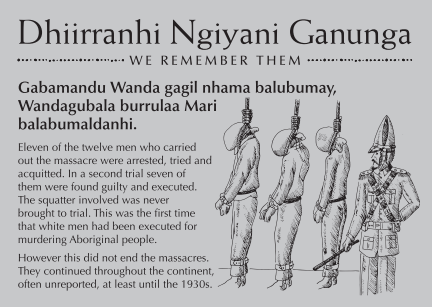
The first is its place as a turning point in colonial justice. After the crime was reported by the station manager, the colonial legal system prosecuted those responsible, resulting in the first convictions and executions of white settlers for the mass murder of Aboriginal people.
The second is its role as a powerful example of reconciliation.
In 1998, descendants of survivors, local community members, and other supporters came together in a reconciliation conference at the site and agreed to establish a permanent memorial.
From this, the Myall Creek Memorial Committee was formed, bringing together Aboriginal and non-Aboriginal Australians, including descendants of both the survivors and the perpetrators. Over several years they worked collaboratively to design and build a memorial dedicated to remembrance, truth-telling and reconciliation. When it opened in 2000, descendants of both groups walked the memorial path together, marking a rare and significant moment of shared acknowledgement.
Today the site is listed on both the NSW State Heritage Register and the National Heritage List, recognising its importance in Australia’s history.
The Myall Creek Massacre Memorial
I had driven past the historic site countless times on my travels around the region, but had never stopped to read the small, simple plaque that previously marked it.
Then, two years ago while driving to Tamworth, I pulled in at the sign for the new memorial and was really impressed by what I found.
It is not a single monument but a whole landscape of remembrance. From the official website:
The Walkway at the Memorial is a winding path representing, for Aboriginal people, the Creator Rainbow Serpent which wandered across the earth, forming the features of the landscape.
The Memorial Rock is surrounded by crushed white granite, white being the colour of mourning for Aboriginal people. The red gravel walkway reminds us of the blood that was shed in the massacre.
The Memorial Rock was surrounded with stones brought from all around the country, acknowledging that this history is part of the history of each one of us, and symbolises the commitment of each of us to truth-telling and reconciliation.
The site also features a tiered, circular gathering space, an Aboriginal garden and modern visitor facilities.
The 2026 Myall Creek Massacre Annual Comemmoration
Each year, Indigenous and non-Indigenous people from across the country gather for the Myall Creek commemoration, walking the memorial path together and remembering those who lost their lives.
I joined the gathering at the Myall Creek Memorial Hall (a community war memorial built in 1923), and grabbed a cup of tea and some Arnott’s bikkies from the nearby shed before settling in for the welcome from the Mayor of Gwydir Shire Council, Tiffany Galvin, followed by opening remarks from Graeme Cordiner, Treasurer of the Friends of Myall Creek Memorial Inc.
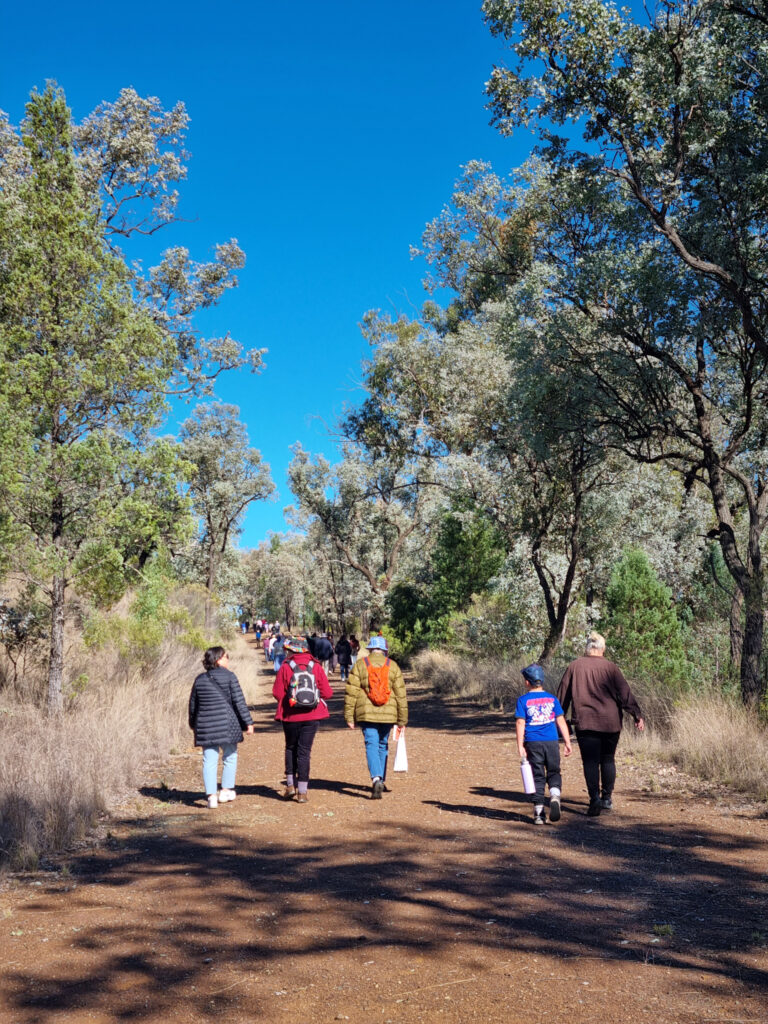
We were then invited to walk up the hill to the memorial site, following the path that reflects the movement from the camp by the river to the ridge where the killings occurred.
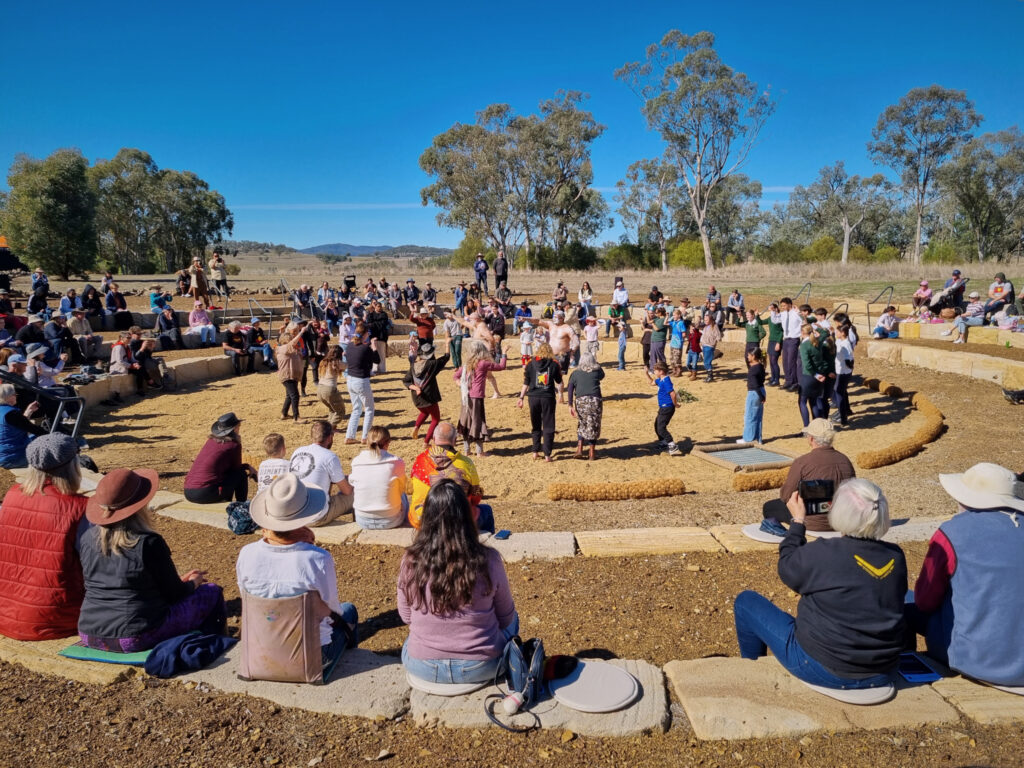
We settled into the tiered seating of the circular gathering space (referred to as the “yarning circle” in the program), or avoided sunburn under the covered visitor facilities for the main commemoration ceremony.
Aunty Sue Blacklock, a Myall Creek Elder, welcomed us to Country, which was followed by a minute of silence in memory of those who suffered and died at the site.
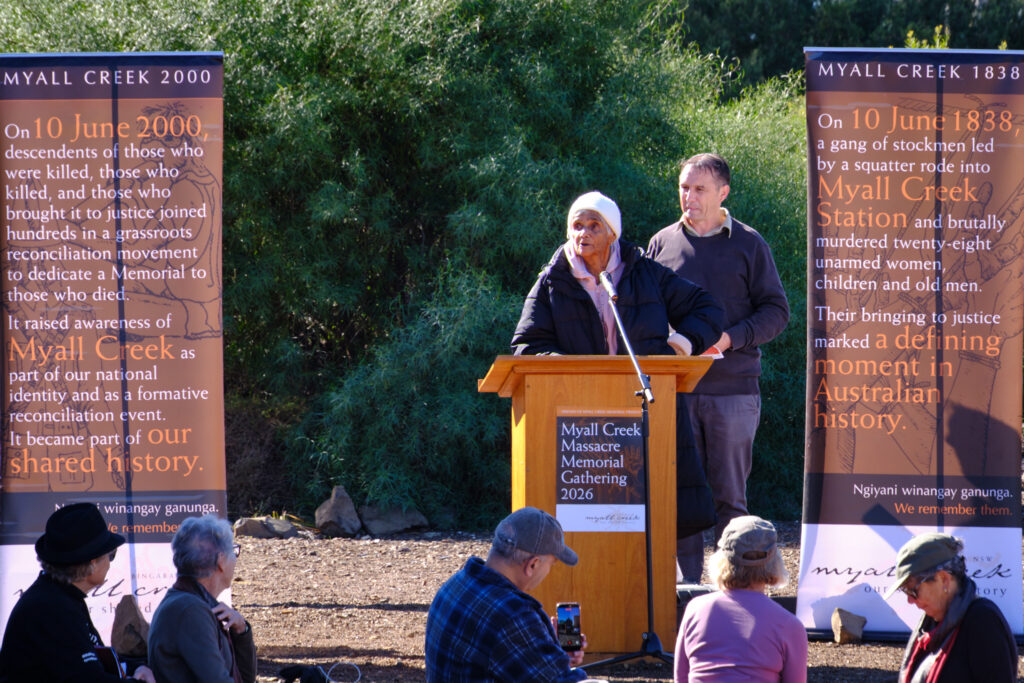
Keith Munro, Aboriginal co-Chair of the Friends of Myall Creek Memorial, gave further welcomes, including to a group of school children who had travelled down from the Gold Coast, and to Geoff Reid, a non-Indigenous 70-year-old man who had walked 474 kilometres from Ballina to Myall Creek in time for the commemoration. Disappointed by the defeat of the Voice Referendum in 2023, Geoff said he wanted to raise awareness and pay his respects by visiting massacre sites along the way.
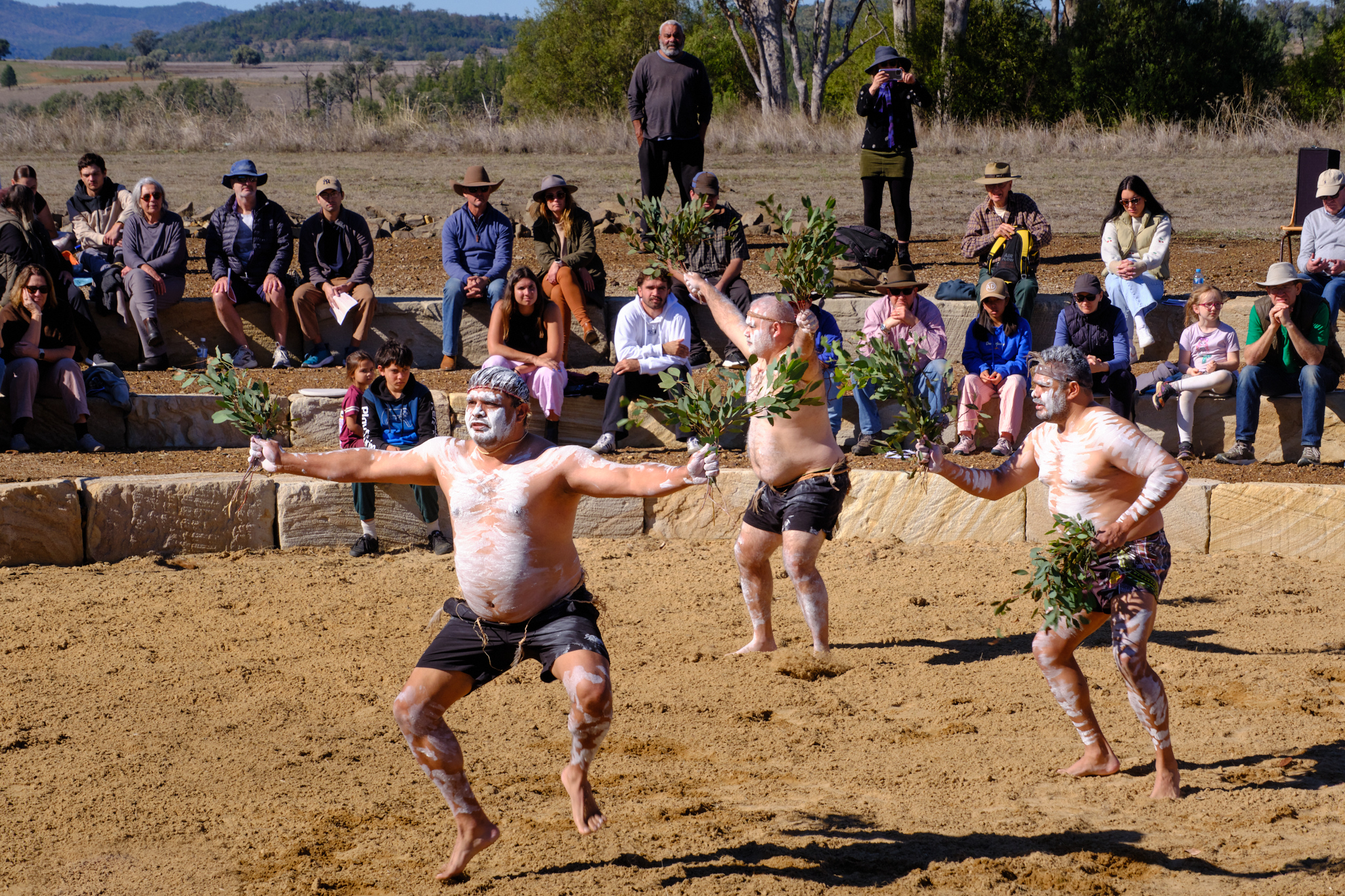
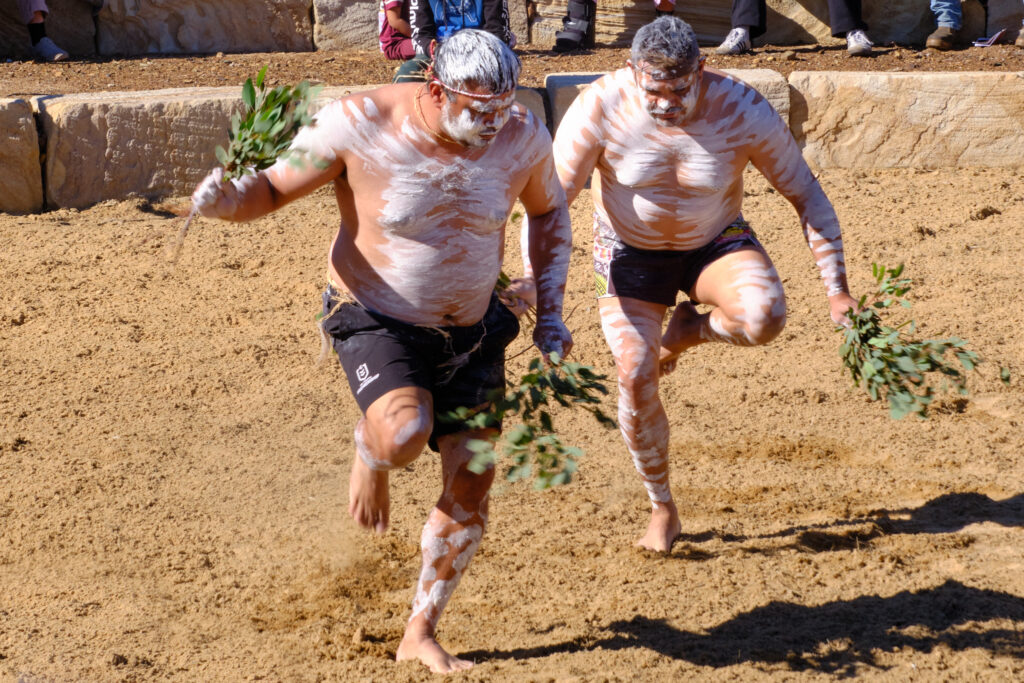
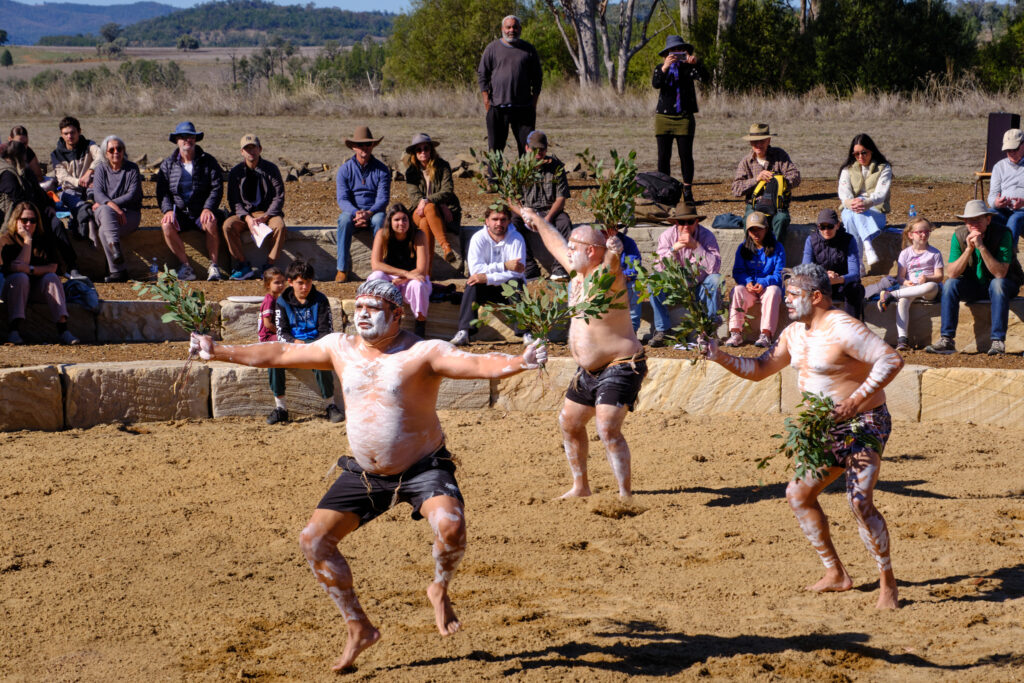
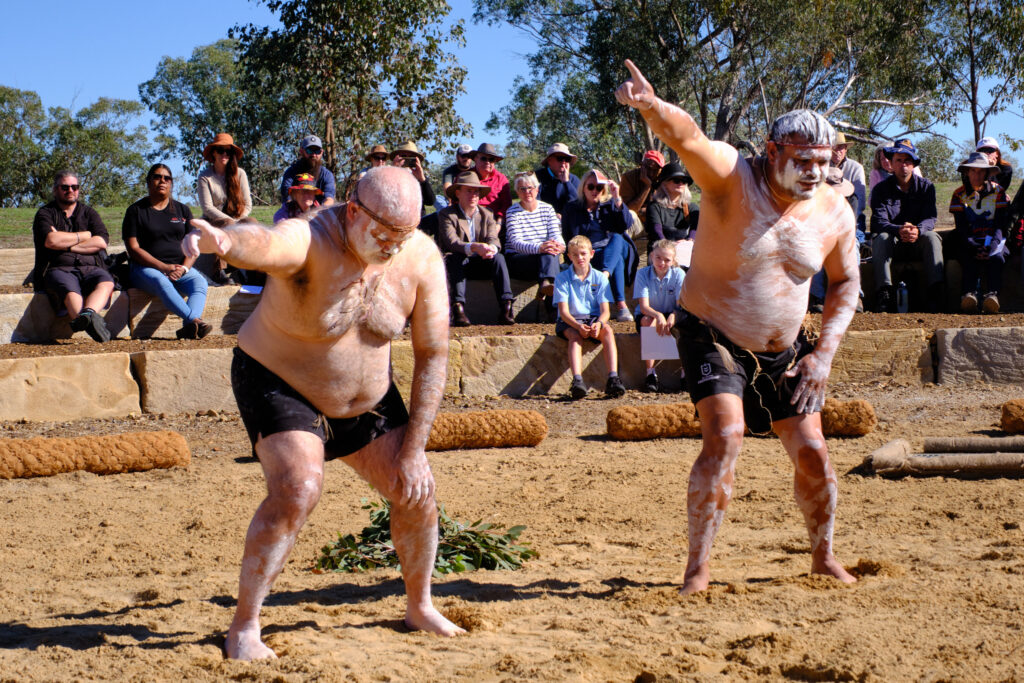
This was followed by traditional dancing by members of the Gomeroi Dance Company, who performed five different dances, including one that invited audience participation
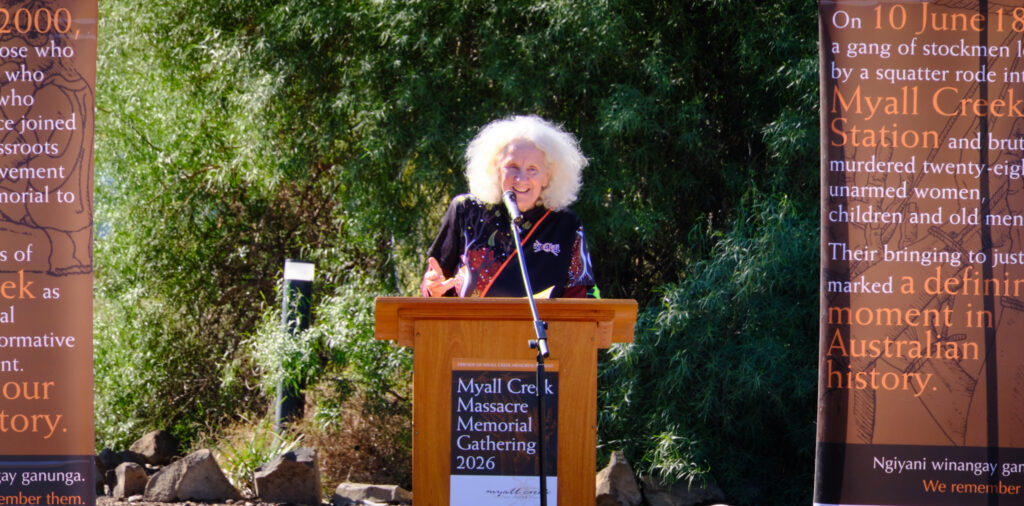
And a keynote address by Emeritus Professor Judy Atkinson, a Waanyi-Garawa woman. She spoke about her experience working with Aboriginal Australians across the country and how sharing experiences of trauma can support healing.
She acknowledged that much of the trauma in contemporary Australia is expressed in the form of domestic violence, and voiced her disappointment and heartbreak at its persistence in First Nations communities. She spoke of children choosing to be on the street rather than at home. How every woman she has ever worked with throughout her long career (she is 82 years old) had suffered some form of violence, often linked to drug and alcohol use.
Her message was that while past harms and intergenerational trauma cannot be undone, change is still possible. She emphasised that it is up to Indigenous communities to say “enough is enough” and take leadership in and responsibility for breaking the cycle. This can only come from within the community.
After an acknowledgement of the past by Ann Daly – the non-Aboriginal co-chair of the Friends of Myall Creek Memorial – we were invited to start the walk along the red gravel path to Memorial Rock.
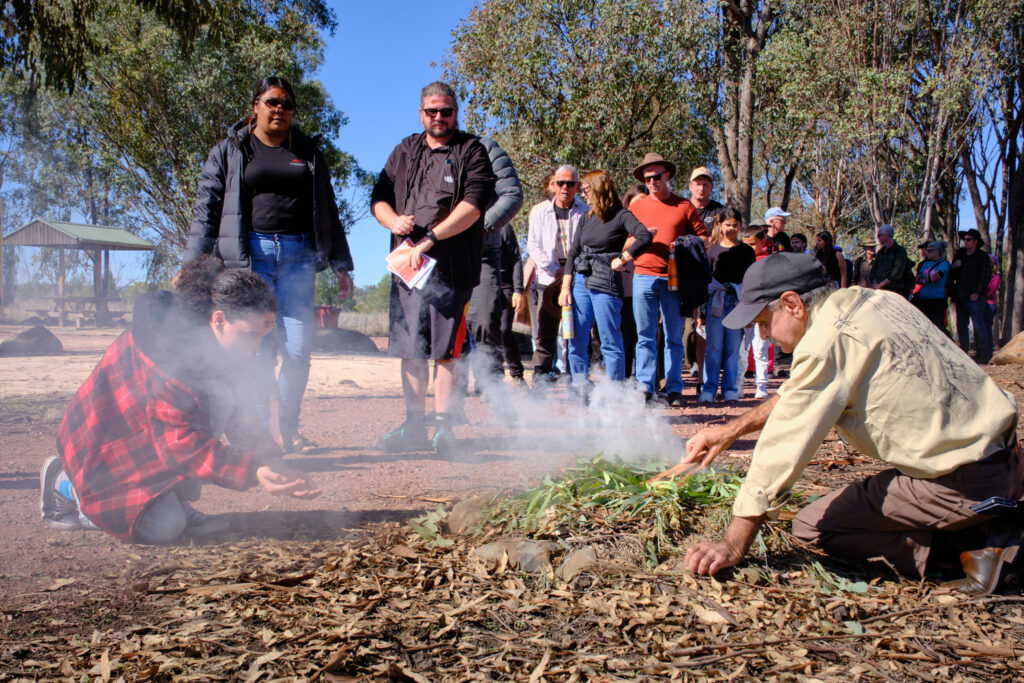
As we started our journey, we were marked on the forehead with red ochre, a traditional earth pigment used in ceremony and remembrance, and were part of a smoking ceremony. This is a traditional Aboriginal cultural practice where native plants (in this case eucalyptus leaves) are placed on a fire and the smoke allowed to drift over people, objects, or an area, as a way to acknowledge Country, honour those being remembered, and prepare participants to enter a space of reflection.
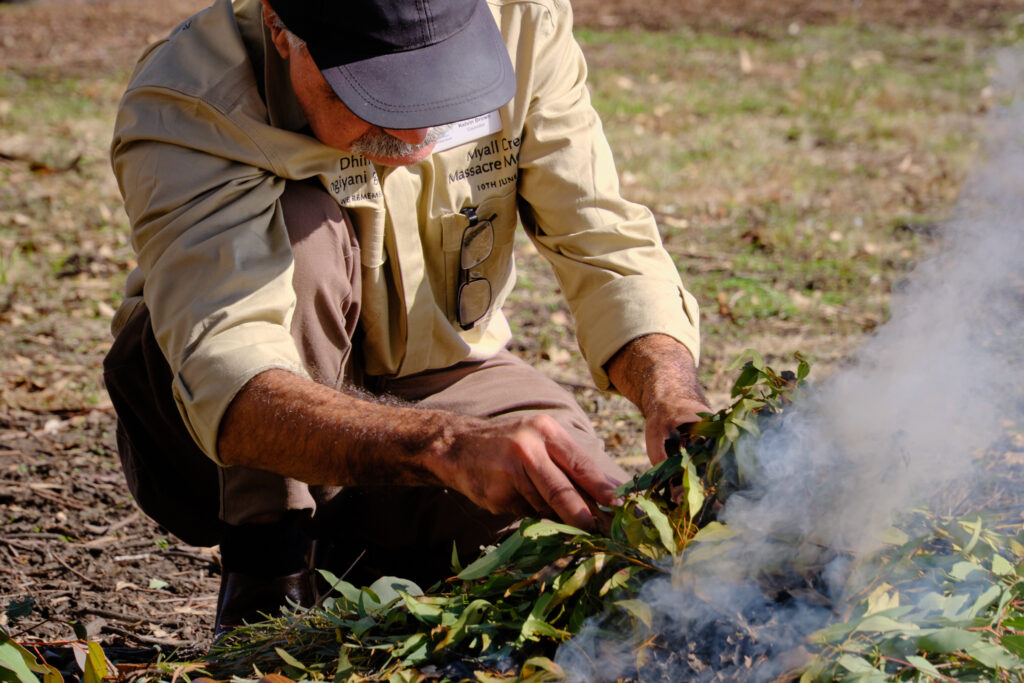
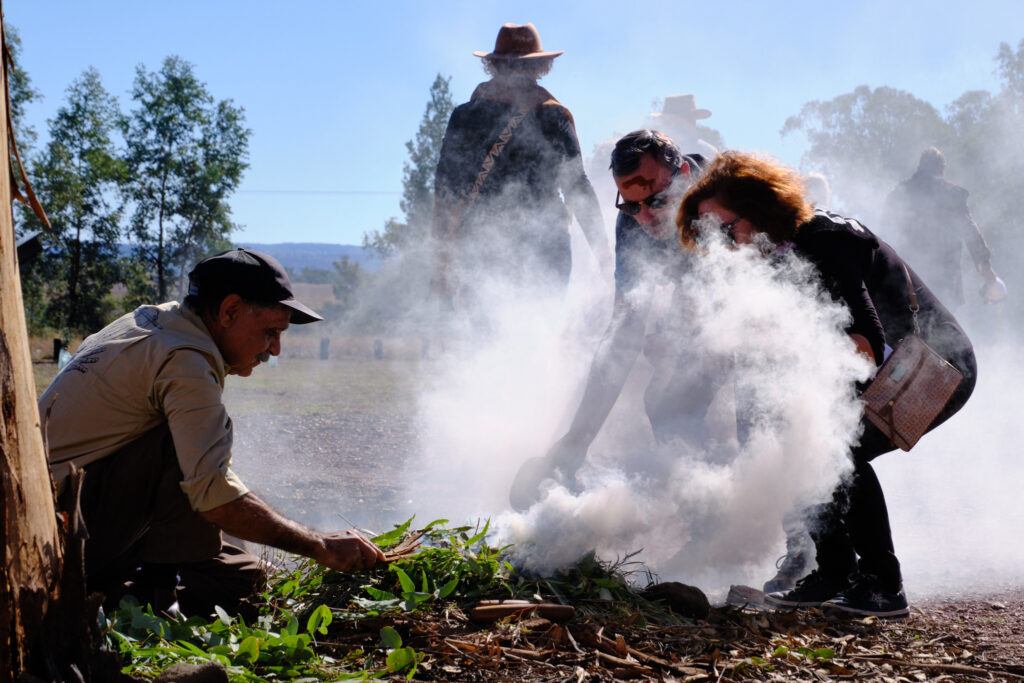
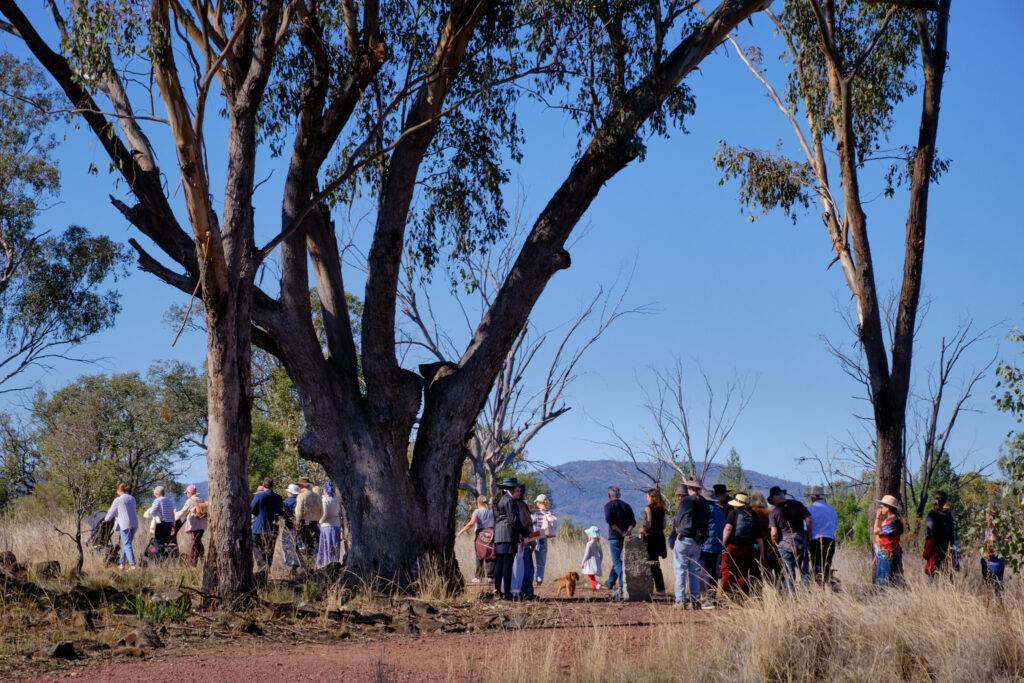
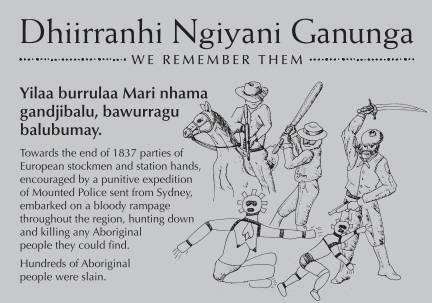
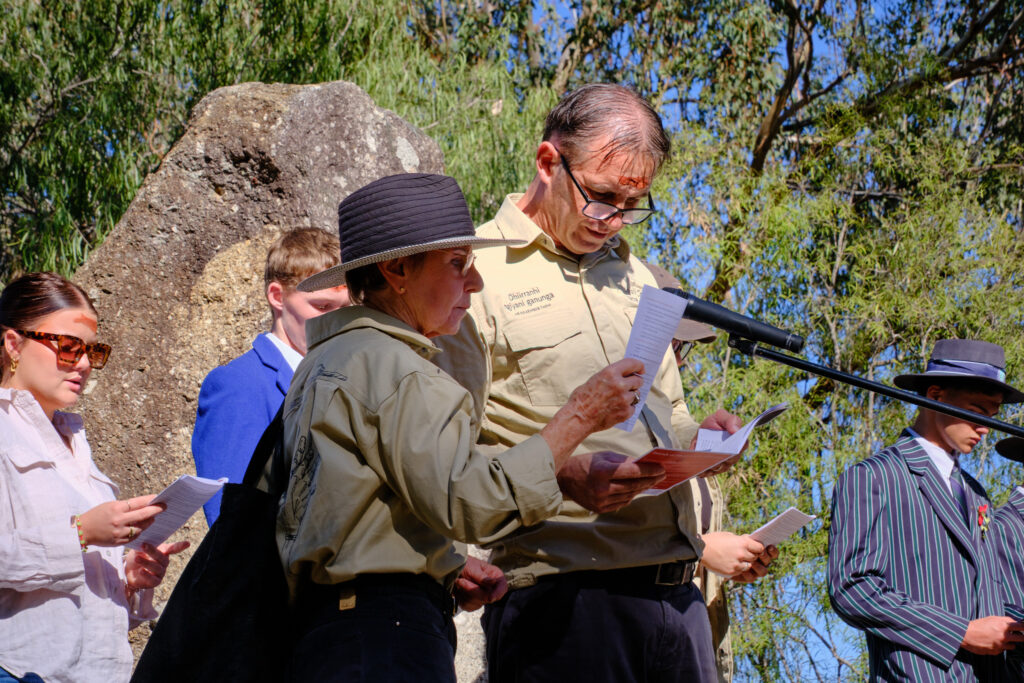
At each of the interpretative panels along the path, school children (including those from the Gold Coast) would read the information aloud to groups of walkers, finishing each oration with “We remember them”.
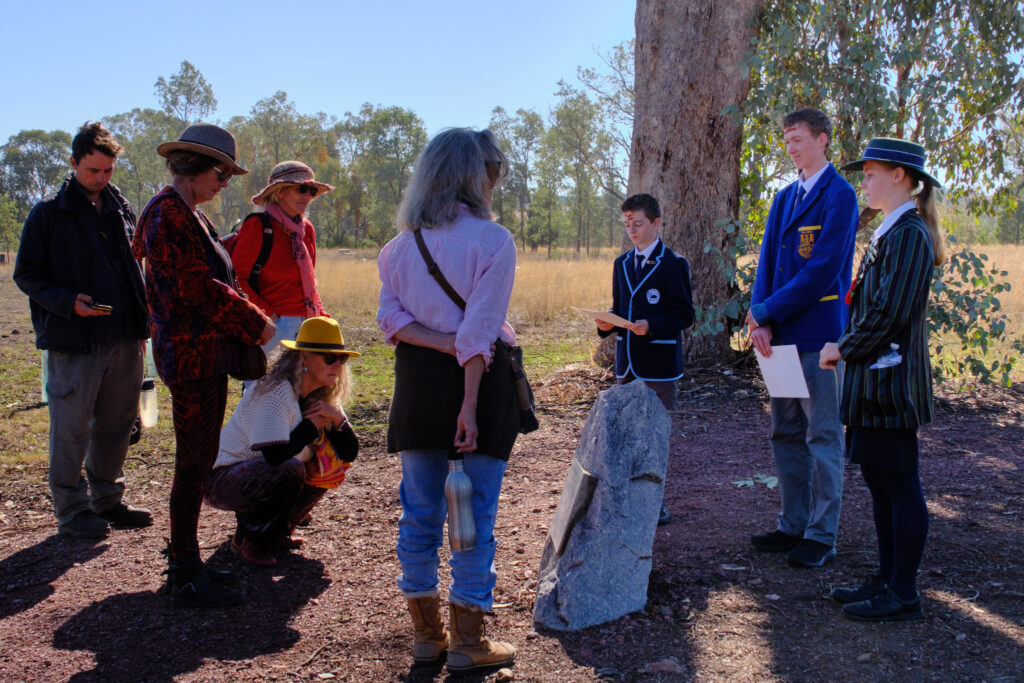
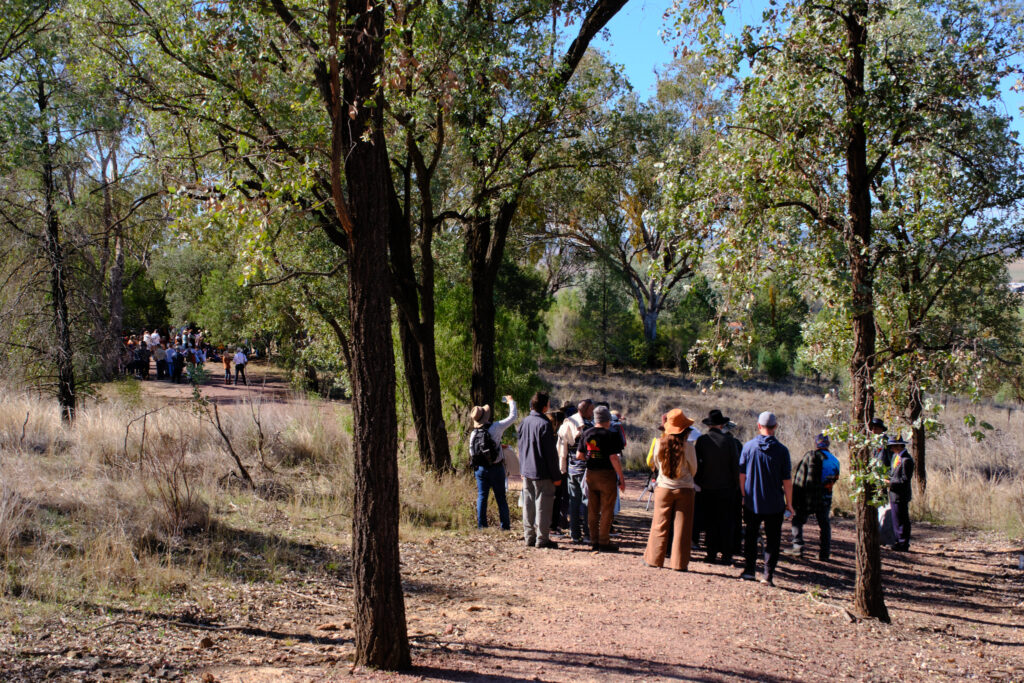
At the end of the reflective walk, we all gathered at Memorial Rock, where we were once again welcomed by Aunty Sue Blacklock. She shared a story about the early conversations between the Indigenous and non-Indigenous people who came together to discuss the creation of a memorial. At the time, it had not rained for a long period. But as they sat and spoke, the heavens opened and the long-awaited rain fell – the tears of joy, of being set free.
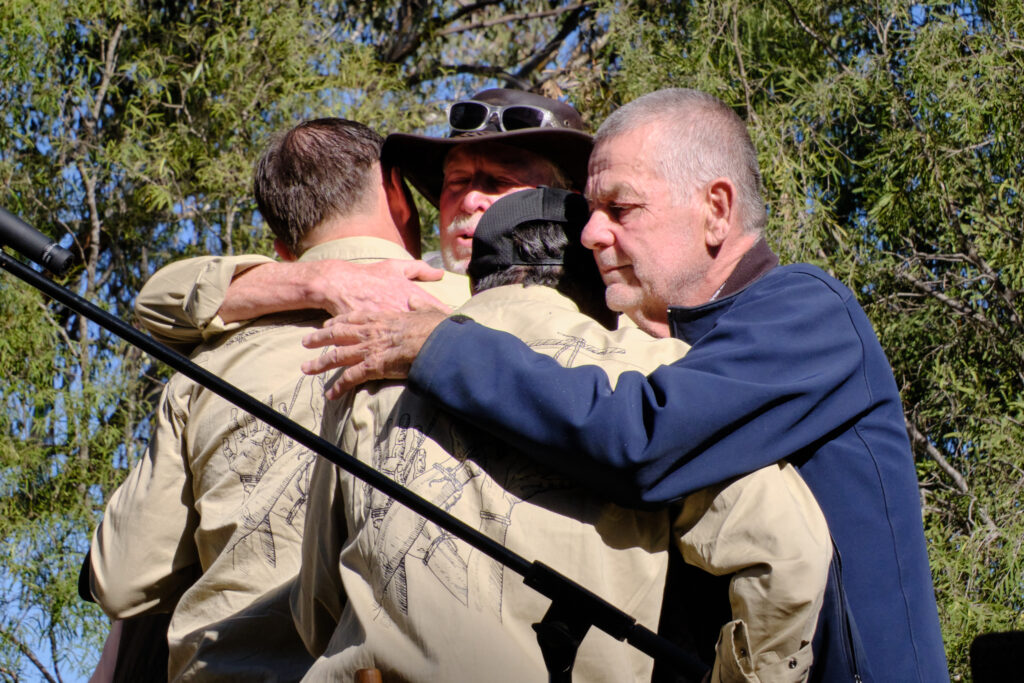
This was followed by another powerful moment when descendants of the perpetrators and descendants of the survivors came forward to acknowledge their ancestors’ roles in the events, before embracing each other as part of their ongoing process of reconciliation.
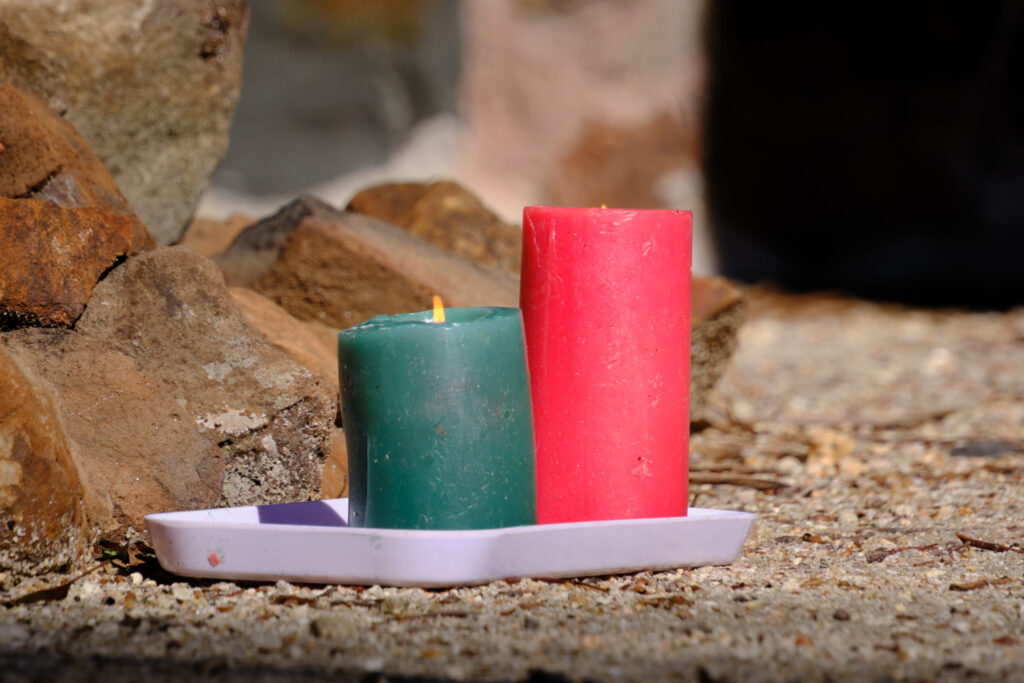
The ceremony concluded with the lighting of a red candle (a reminder of the blood shed at the site) and a green candle (representing hope, healing, and new life) by a representative of each party
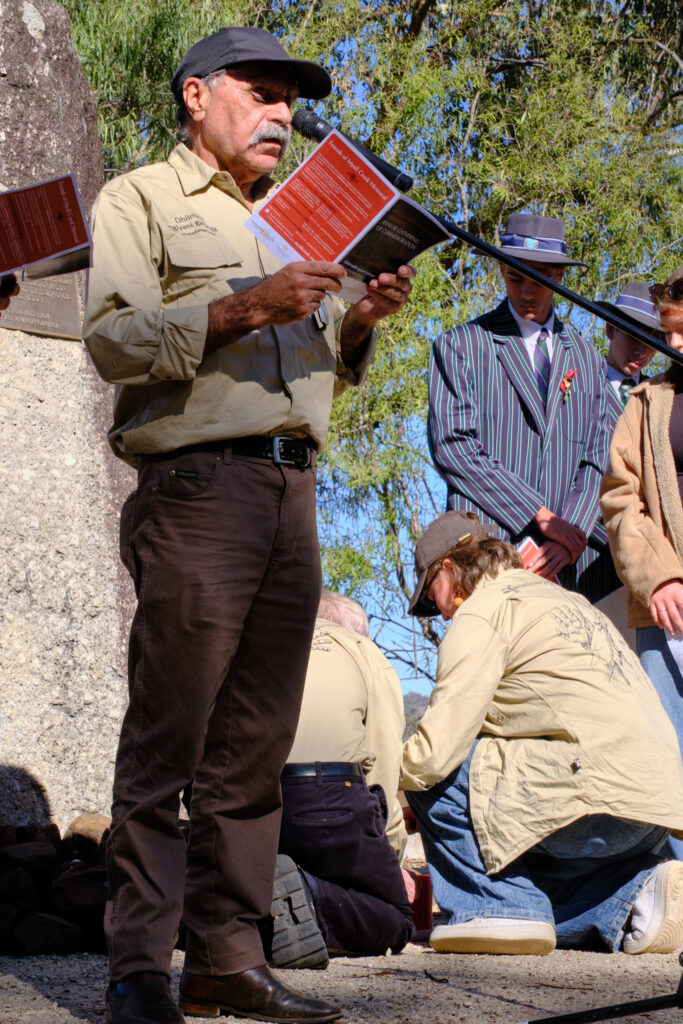
and a commitment to the future led by the Indigenous and non-Indigenous co-Chairs of the Friends of Myall Creek Memorial committee.
Together let us continue our journey, searching our own hearts and reflecting on our own attitudes with alienate us from one another. Together we will work for a future in which we are all able to contribute our gifts to this nation. Let us work to end the injustice and prejudice which continue to sideline Aboriginal and Torres Strait Islander people, so that young people need no longer bear a grudge against the society because it treats their history and culture unfairly. Let us work till the history of 60,000 years is honoured together with the history of the last two centuries; till the glorious parts are celebrated with pride, and the dishonourable parts are acknowledged with shame.
And then – in true Australian style – it was time for a BBQ lunch back at the Myall Creek Memorial Hall 🙂
Personal Reflection
The Myall Creek Massacre Memorial, and everything that has grown around it, is a beacon of light on the path towards reconciliation in Australia. Although I haven’t lived in Australia for ten years, I have noticed a greater acknowledgement of Aboriginal history and culture since I left, perhaps most visibly through the widespread adoption of Acknowledgement of Country. Even so, there is still a long way to go.
One of the themes that emerged repeatedly throughout the day was that reconciliation is not something that can be achieved by one side alone. It requires honesty, responsibility and effort from everyone involved.
As Professor Judy Atkinson said in her address, Indigenous communities have an important role to play in breaking cycles of violence and creating change from within. But non-Indigenous Australians also have responsibilities. They must be willing to listen, to learn the history of the country, to challenge racism when they encounter it, and to engage with First Nations people as fellow Australians rather than as problems to be solved.
What struck me most about Myall Creek was that it offers a practical example of what that can look like. The memorial exists because descendants of survivors and descendants of perpetrators chose to come together, acknowledge a difficult history, and create something meaningful in its place. It does not erase the past, nor does it pretend that the challenges of the present do not exist. Instead, it shows that truth-telling, respect and a willingness to work together can create a path forward.
To learn more about the Myall Creek Massacre and Memorial site: